
Protecting metal from corrosion is an essential step for any metal structures used outdoors: power line pylons, lighting poles, fences and fasteners. The most common methods are hot-dip galvanising and cold galvanising. These technologies differ in terms of the application process, coating thickness, service life and cost. Let’s examine the differences in detail.
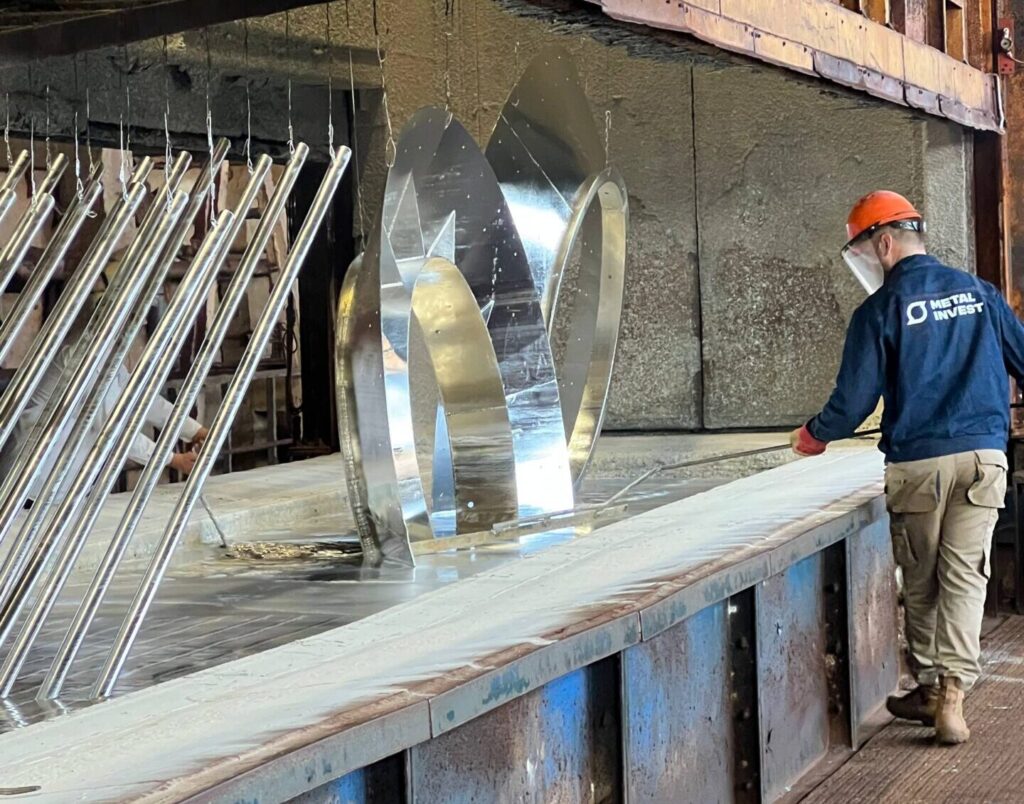
What is hot-dip galvanising?
Hot-dip galvanising (the hot or immersion method) involves immersing a metal product in a bath of molten zinc at a temperature of 440–460 °C. As a result, a zinc-iron alloy forms on the surface, which is firmly bonded to the metal at a molecular level.
Key characteristics:
Coating thickness: 50–120 mkm, depending on the thickness of the metal (regulated by DSTU EN ISO 1461)
Service life: 25–50 years, depending on operating conditions
The coating is uniform on all sides, including internal cavities and welded seams
Production process — immersion in an industrial bath (for example, a 14-metre-long bath allows large-scale structures to be treated in a single pass, without joint connections)
What is cold galvanising?
Cold galvanising involves applying a zinc-rich paint or primer to a metal surface using a brush, roller or spray gun, without heating the workpiece.
Key characteristics:
Coating thickness: 20–40 mkm per coat
Service life: 5–15 years, requires periodic renewal
The bond is mechanical (adhesive) rather than metallurgical — that is, the coating adheres to the surface rather than fusing with it
Suitable for repairing damaged areas on hot-dip galvanised products, and for painting large-scale structures on site where immersion in a galvanising bath is not possible
Comparative table
| Parameter | Hot-dip galvanizing | Cold galvanizing |
| Process temperature | 440–460 °C | Room temperature |
| Coating thickness | 50–120 µm | 20–40 µm |
| Service life | 25–50 years | 5–15 years |
| Bond type | Metallurgical (alloy) | Adhesive (mechanical) |
| Protection of internal cavities | Yes, complete | No, outer surface only |
| Cost per m² | Higher (offset by service life) | Lower initially |
| Typical application | Transmission line towers, masts, metal structures, fasteners | Coating repair, hard-to-reach areas, on-site installation |
What to choose: practical criteria
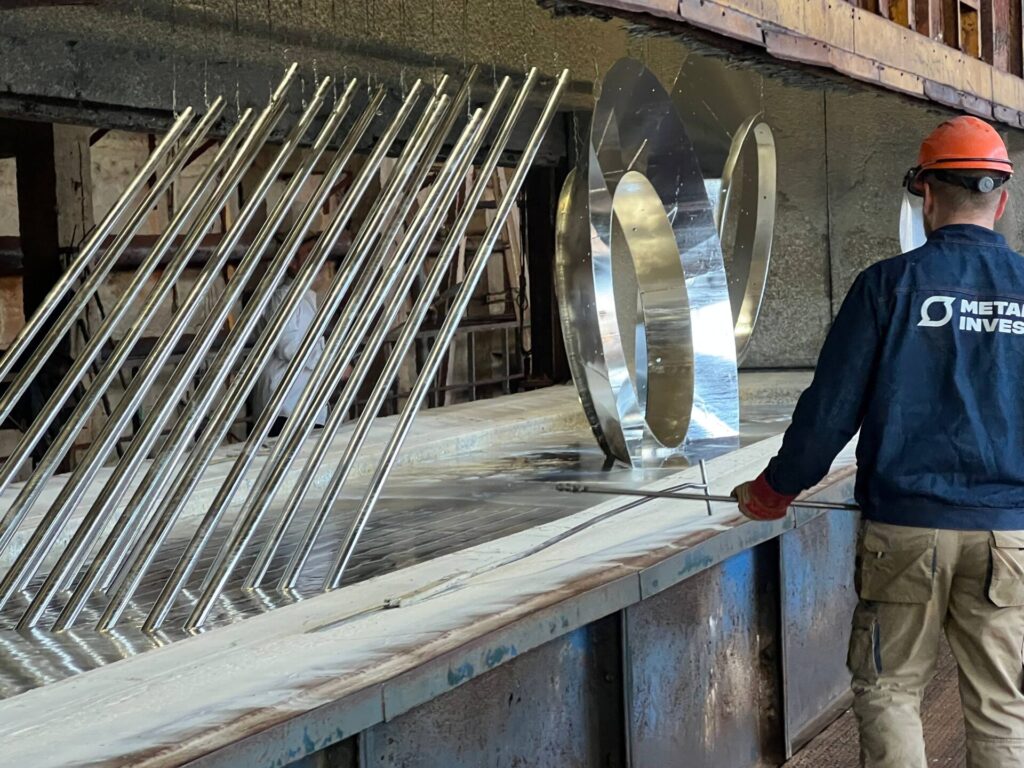
For new metal structures intended for long-term use (supports, masts, frames, fencing), hot-dip galvanising is the best option: it ensures the maximum service life without the need for maintenance.
For small fasteners and metal fittings manufactured in large batches, hot-dip galvanising is also recommended; it ensures uniform coverage of threads and internal surfaces.
For repairing welded joints after installation or localised damage to the galvanised coating, cold galvanising with zinc-rich paint is used, as it is not possible to re-dip a structure that has already been installed.
For projects with a limited budget and a short service life, cold galvanising may be a temporary solution; however, the savings on the initial cost usually result in higher maintenance costs in the long term.
FAQ
Hot-dip galvanising is more durable: thanks to the metallurgical bond between the zinc and the metal, the coating’s service life is 25–50 years, compared with 5–15 years for cold galvanising.
Yes. It is standard practice to hot-dip galvanise the main structure at the factory and use cold galvanising (zinc-rich paint) to restore the coating in the welded joint areas after on-site assembly.
The cost depends on the weight of the product, the surface area and the batch size. A cost estimate is provided on a case-by-case basis upon receipt of the specification.
Yes, the process is regulated by DSTU EN ISO 1461, which specifies the minimum coating thickness depending on the thickness of the base metal.