
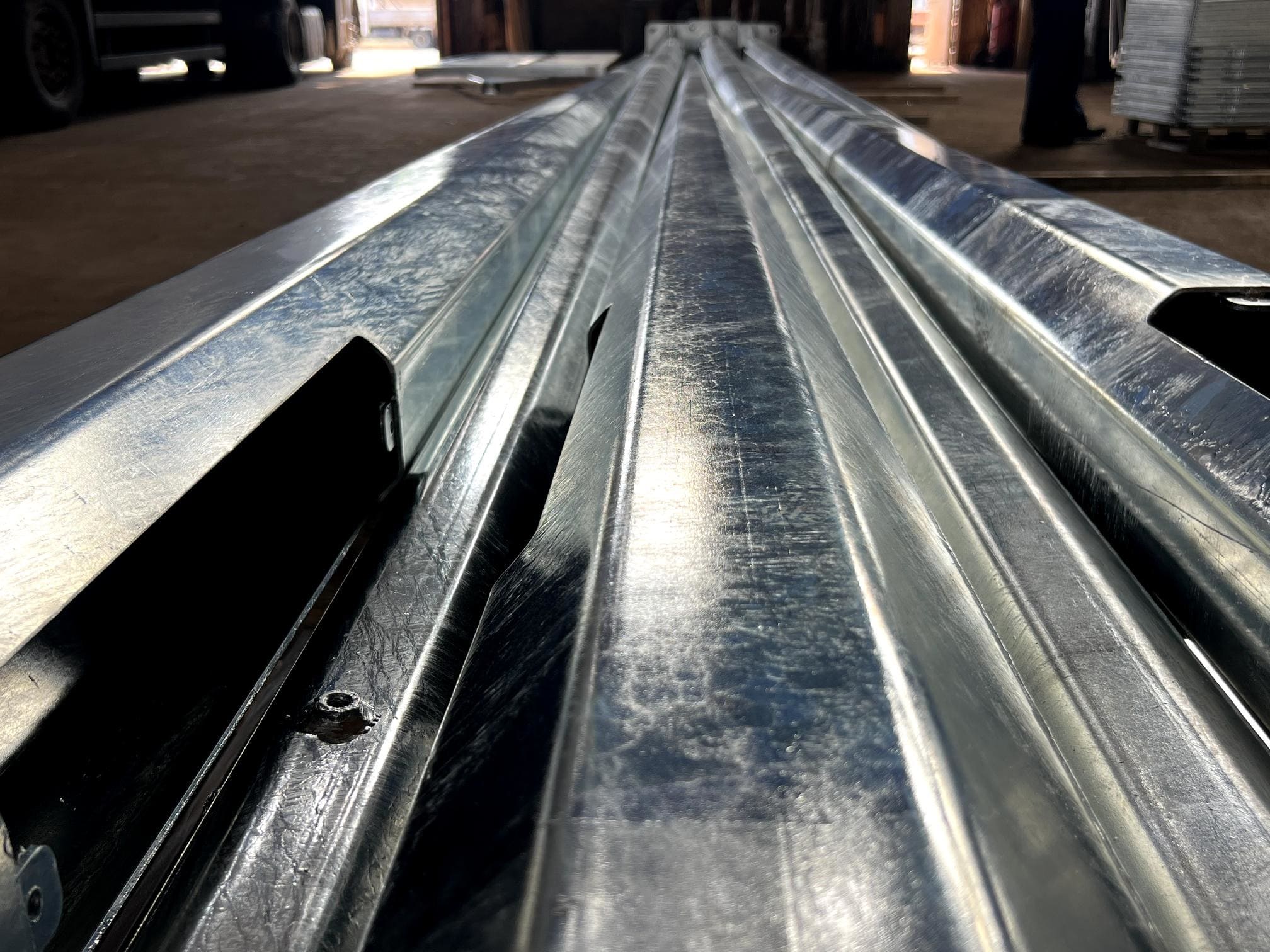
Hot-dip galvanising is the industry standard for metal protection in Cherkasy, ensuring unrivalled durability for structures. In a world where corrosion causes damage to infrastructure every year, this method is becoming a fundamental investment for any responsible business.
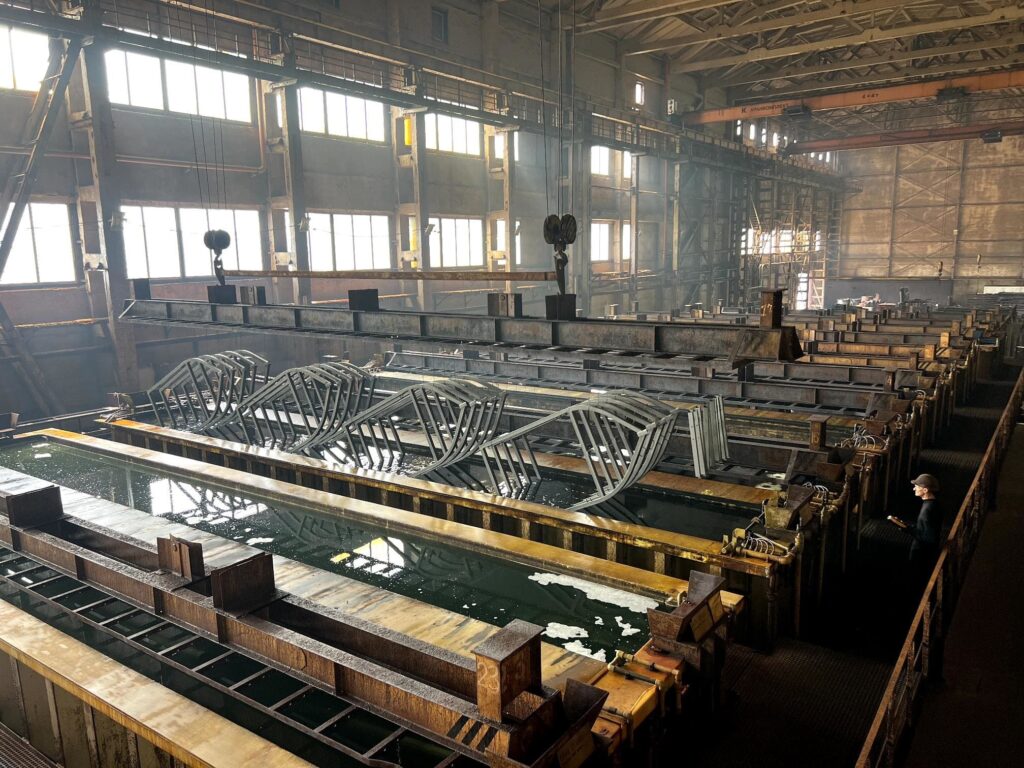
Why is choosing hot-dip galvanising an investment in durability?
The main advantage of hot-dip galvanising lies in creating a reliable barrier between the steel and the corrosive environment. The key benefits of this method include:
- High corrosion resistance: The coating withstands decades of use even under the harshest conditions.
- Self-healing effect: When minor scratches appear, the zinc ‘seals’ them through electrochemical processes, preventing damage to the base steel.
- No need for frequent maintenance: Galvanised structures do not require annual painting, which significantly reduces operating costs over the structure’s lifetime.
Main areas of application for galvanised steel structures
Thanks to its reliability, galvanised steel has become indispensable in many B2B sectors. A general table of the types of structures that should be galvanised:
| Sector | What We Galvanize | Why It Is Critically Important |
|---|---|---|
| Construction and Infrastructure | Bridges, support beams, overpasses | Protection against precipitation and salt |
| Agri-industrial sector | Grain silos, hangars, irrigation systems, farms | Resistance to corrosive environments (fertilisers, moisture) |
| Energy and Telecommunications | Power line pylons, mobile phone masts, towers | Work in hard-to-reach places where painting is not possible |
| Road Infrastructure | Crash barriers, lighting columns, signs, frames | Safety and a long service life free from corrosion |
MetalInvest’s expert opinion: the importance of coating quality
At MetalInvest, we are convinced that the quality of protection depends not only on the thickness of the zinc layer, but also on technical discipline.
“Our process engineer notes that proper surface preparation prior to hot-dip galvanising extends the service life of a structure by 5–7 years. The quality of zinc adhesion to steel depends on thorough degreasing and pickling, which we carry out at our production facility.” – Alona Tomashchuk
That is precisely why we pay particular attention to every stage of metal preparation, ensuring that our structures meet the highest quality standards.
Why do professional developers choose hot-dip galvanising? Applications in industrial construction
In modern construction, a structure’s service life is a key indicator of its quality. Using steel structures without proper anti-corrosion protection is a deliberate risk of hidden defects arising. Hot-dip galvanising is now the gold standard, enabling major repairs to be avoided for decades to come.
In the construction industry, we work with a wide range of structures where protection against moisture and external factors is critical:
- Load-bearing building frames: Columns, beams and trusses, which form the ‘skeleton’ of the structure. The zinc coating ensures the structural integrity of the framework, regardless of humidity levels.
- Bridge structures and flyovers: These structures are constantly exposed to precipitation, temperature fluctuations and, frequently, aggressive road de-icing agents (salts).
- Fencing systems and façades: Metal subsystems for curtain walls, fences and balustrades, which must retain their aesthetic appearance without any signs of corrosion.
- Staircases and fire escapes: Elements located outside the main building and most exposed to the external environment.
For a construction company, hot-dip galvanising is not just a technical solution, but also a strategic cost-saving measure:
- Minimisation of operating costs: Galvanised components do not require periodic repainting. This eliminates maintenance costs for 20–30 years.
- Speed of installation: Galvanised components arrive at the construction site ready for installation. There is no need to spend time applying anti-corrosion paint on site.
- Structural integrity: Unlike cold galvanising or painting, the hot-dip galvanising process ensures complete coverage of the structure, including hard-to-reach internal cavities within profiled tubes.
Our technician’s view: “In construction projects, we often see how structures galvanised using the hot-dip method retain their original strength even 40 years after installation. The key requirement is correct structural design, so that the zinc can freely penetrate all the structural openings.”
Hot-dip galvanising in the agricultural sector: how to protect grain silos and hangars from corrosion
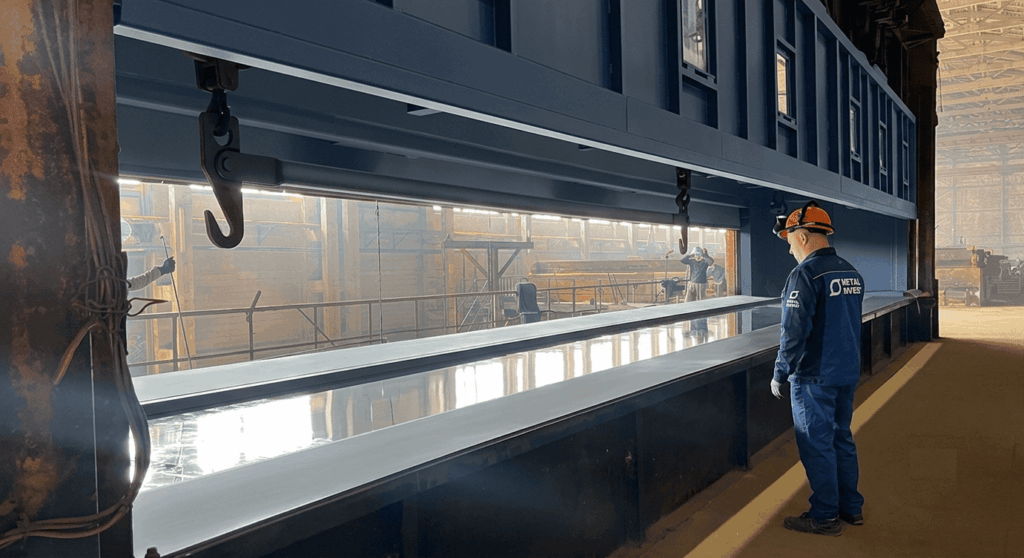
For an agribusiness, steel structures form the backbone of its production facilities. However, in today’s farming environment, simply painting metal becomes a never-ending and costly cycle of maintaining facilities in working order. Hot-dip galvanising offers a solution that means you can forget about anti-corrosion treatment for 50 years.
Key structures in the agricultural sector requiring galvanisation
1. . Galvanisation of grain elevator equipment
Silo frames, conveyor supports and load-bearing steel structures are subject to heavy loads. Hot-dip galvanising not only provides protection against rust but also ensures a smooth surface, which is important for removing dust and grain residue.
2. Galvanising of hangar and grain storage facility frames
Large-scale hangar structures require no maintenance whatsoever once hot-dip galvanised. This eliminates the need for work at height to repaint the structures, resulting in significant savings for the company.
3. Galvanising of irrigation (watering) systems
Pipes and fittings for irrigation systems are in constant contact with water. Hot-dip galvanising coats the metal both inside and out, ensuring that no rust forms inside the pipes.
Benefits for agribusiness: Why is it cost-effective?
- Full payback: The cost of hot-dip galvanising is higher than that of painting only at the installation stage. However, over the following 10 years, the cost of painting exceeds that of galvanising by a factor of 3–5.
- Product safety: The galvanised coating is environmentally safe and does not release harmful substances when in contact with foodstuffs (grain, seeds), which is important for certification to international standards.
- High resistance to mechanical damage: Paint is easily scratched during loading, unloading or the installation of equipment. The zinc layer is metallurgically bonded to the steel, so it does not peel off even when subjected to heavy impacts.
Our technician’s view: ‘In the agricultural sector, we often work with non-standard structural components. Hot-dip galvanising has a unique advantage — it ‘coats’ all hard-to-reach areas, welded joints and the internal cavities of profiled pipes. No brush or spray gun can provide such protection at structural joints.” — Alona Tomashchuk
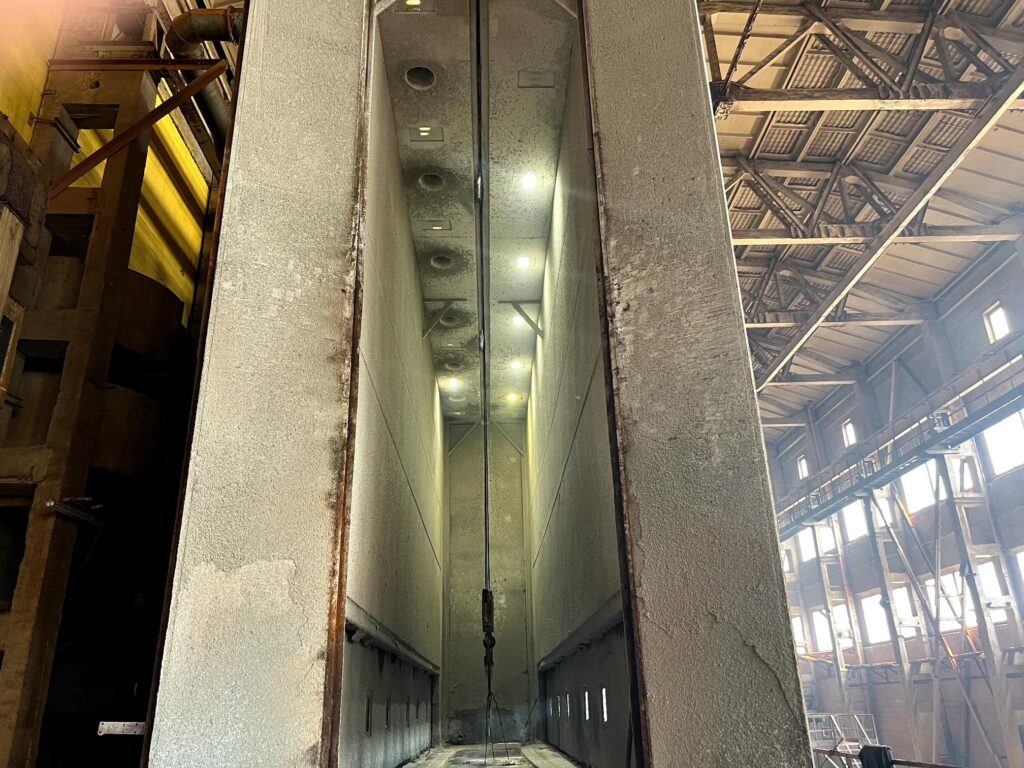
Hot-dip galvanising in the energy and telecommunications sectors:
Energy infrastructure is often located in remote areas, where carrying out regular maintenance work is technically challenging and financially burdensome.
Benefits for the sector:
- Protection in hard-to-reach areas: It is virtually impossible to paint pylons regularly when they are situated in marshy terrain, fields or along power lines. The zinc coating ‘works’ autonomously, requiring no monitoring.
- Resistance to vibrations and loads: Mobile phone masts are subjected to constant wind loads. Hot-dip galvanising does not crack under deformation, unlike paint and varnish materials, which become brittle over time.
- Absence of ‘localised’ corrosion: Rust most often appears at bolted joints in structures. The hot-dip galvanising process ensures that every component, including threaded holes and the edges of the metal, is fully protected.
What types of structures require galvanising in the energy sector
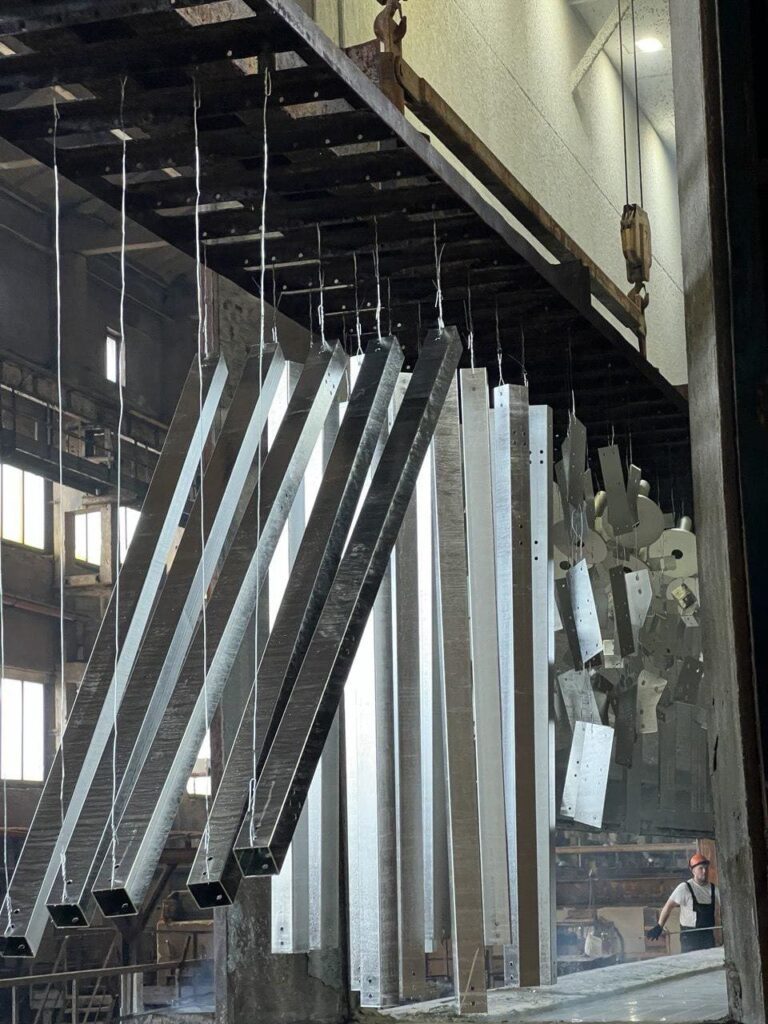
- Power line pylons: Both the main load-bearing structures and auxiliary components (cross-arms, brackets).
- Telecommunications towers and masts: From tall structures for base stations to compact antenna masts in urban areas.
- Gantry structures and substations: Steel structures for outdoor switchgear operating under constant voltage and exposed to the elements.
- Cable support systems: Galvanised trays and brackets providing protection and cable routing within power distribution centres.
An expert approach: what MetalInvest’s specialists focus on
The design of structures for the energy sector has its own specific characteristics, which we take into account when accepting orders:
«When galvanising telecommunications masts and power line pylons, we always advise clients to avoid creating enclosed air cavities. If there are cavities in the steel structure, we help to correctly position the process openings for zinc ingress and air escape. This guarantees a perfect coating quality both on the outside and inside of the profiled tubes,» notes our technologist – Lyudmila Fait, Head of the Quality Control Department.
How do I order hot-dip galvanising for a metal product?
Are you planning a large-scale project? We’ll provide reliable protection for your metal structures that will stand the test of time and withstand harsh weather conditions.
Find out more about the service and submit a request for hot-dip galvanising.