
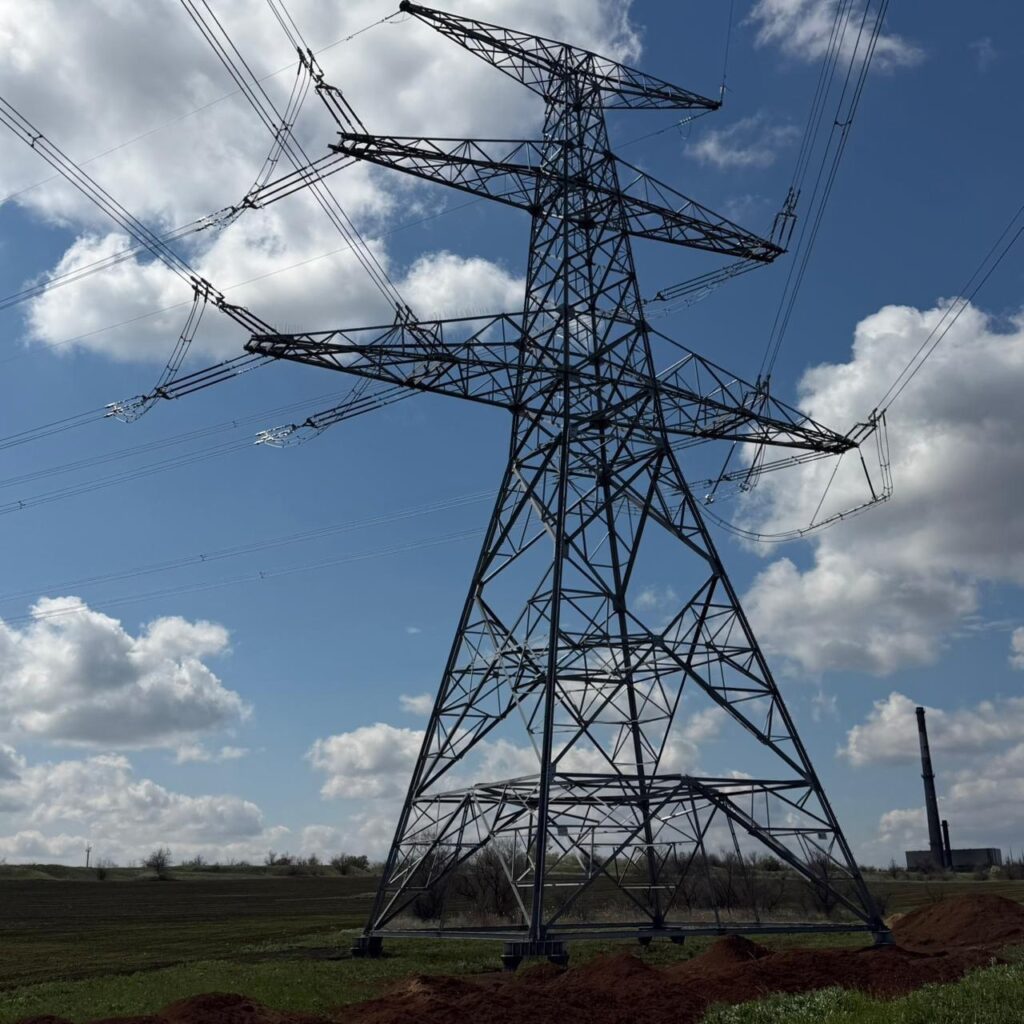
A reliable power line does not begin with the wire, but with the pylon. It is the pylon that bears the weight of the wires, wind and ice loads, and the tension in the spans and at the bends in the line. An error in the calculation or selection of the tower type costs more than the structure itself — it leads to emergency outages, unscheduled repairs and risks to personnel.
Metalinvest specialises in the manufacture of power line towers for overhead power lines with voltage classes ranging from 0.4 kV to 110 kV and above. Our product range includes metal lattice pylons, angle pylons and anchor pylons, manufactured to standard designs or the customer’s individual drawings, with hot-dip galvanising for long-term protection against corrosion. We supply pylons to energy companies, contractors, construction firms and industrial enterprises throughout Ukraine.
Manufacturing of electricity transmission pylons: how it works
The manufacture of electricity transmission pylons is not a mass-production process, but an engineering process in which every stage affects how long the pylon will last without requiring repair.
Technical specifications and calculations. At the outset, the line’s voltage class, the type of terrain (open, forested, mountainous), wind and ice loads specific to the region, the angle of the line (if the pylon is angled) and the span length are determined. These parameters determine the cross-section of the rolled steel, the height of the pylon and the method of securing it to the foundation.
Design. For standard lines, tried-and-tested tower designs are used, which already comply with current regulations. For non-standard conditions — such as a complex route, increased loads or limited space for the tower — a bespoke drawing is developed.
Manufacture of the steel structure. The support is assembled from angle or tubular sections using welding and bolted joints, depending on the type of structure. Lattice supports are assembled in sections for ease of transport and on-site installation.
Hot-dip galvanising. The finished steel structure is immersed in molten zinc, creating a protective coating that lasts for the entire service life of the support — this is critical for structures that remain exposed to the elements for decades.
Delivery and installation support. The pylons are delivered to the site either disassembled or partially assembled, with technical support for the installation work provided where required.
Power line pylons can be manufactured either to a standard design (faster and cheaper) or to the customer’s individual drawings — when standard solutions are not suitable for a specific route or load.
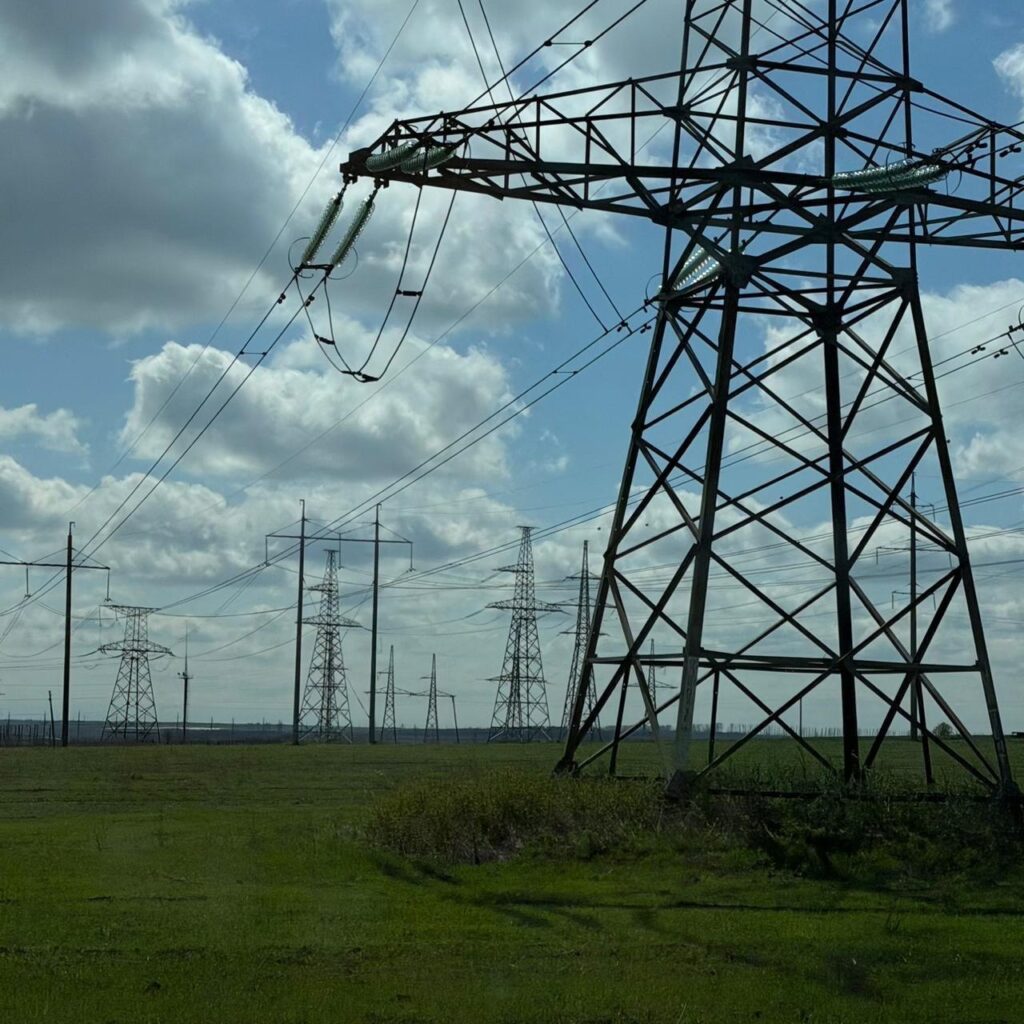
Metal lattice pylons for power lines
A lattice pylon is a three-dimensional truss made of metal angle sections joined to form triangular sections. This design offers high strength whilst using a relatively small amount of metal compared to solid-section pylons.
Where they are used:
- long-distance transmission lines, where saving on metal per kilometre of route is important;
- regions with high wind and ice loads, where the lattice structure redistributes forces more effectively;
- high- and extra-high-voltage lines (35 kV, 110 kV and above), where considerable tower height is required.
Advantages over reinforced concrete pylons:
- lower weight during transport and installation — heavy lifting equipment is not always required;
- ease of repair: a damaged section can be replaced without dismantling the entire pylon;
- resistance to mechanical loads with a smaller foundation footprint;
- longer service life provided the galvanisation is of high quality — unlike reinforced concrete, the metal does not deteriorate due to corrosion of the reinforcement from within.
Angled electricity pylons
Where a power line changes direction, a straight pylon cannot withstand the lateral load — the cable pulls the structure sideways with a force proportional to the angle of the bend. This is where angled electricity pylons come into play — a reinforced structure designed specifically to withstand this lateral force.
Key features:
- a reinforced foundation and additional bracing in the structure to counteract the lateral pull of the wires;
- the calculation of the angular force depends on the angle of deflection, the number of wires and the climatic loads in the region;
- they are installed at points where the route changes direction and often also serve as anchor towers if the angle is significant.
Choosing the wrong type of tower—intermediate or corner—at a bend in the line is one of the most common causes of accidental wire breaks during the first few years of operation.
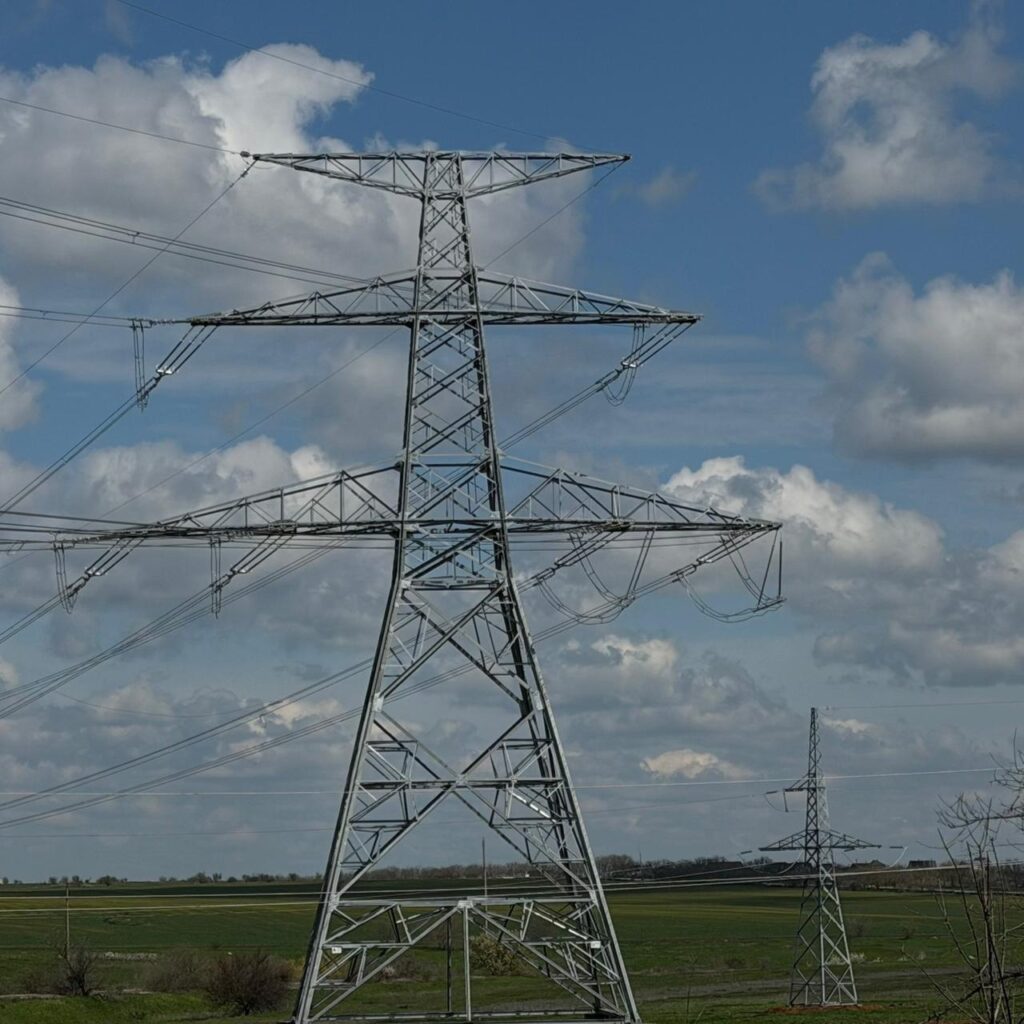
Anchor towers for power lines
An anchor tower is a ‘fixed point’ on a power line. Unlike an intermediate tower, which merely supports the wire between spans, an anchor tower bears the full tension of the wire from both sides and rigidly fixes its position.
Where power line anchor supports must be installed:
- at the start and end of each section of the line;
- at points where the line crosses roads, other power lines or utility networks — in accordance with regulatory requirements;
- every few spans on long power lines, to limit the area affected by a potential cascade of wire breaks in the event of an accident;
- at points where there is a significant change in terrain or angle of curvature.
Anchor pylons on power lines have a reinforced design compared to intermediate pylons — thicker rolled steel, a more robust mounting base and a reinforced foundation. This is a deliberate design feature: if a break occurs on the line, it is the anchor pylon that limits the damage to a single span, rather than the entire route.
Why Metalinvest
- Manufacturing of power transmission line (PTL) structures according to standard designs and custom customer drawings
- Full-cycle service: load calculations → manufacturing → hot-dip galvanizing → delivery
- Steel lattice, angle and anchor structures for 0.4–110 kV and higher voltage lines
- Supply for energy companies, contractors, industrial and private facilities throughout Ukraine