
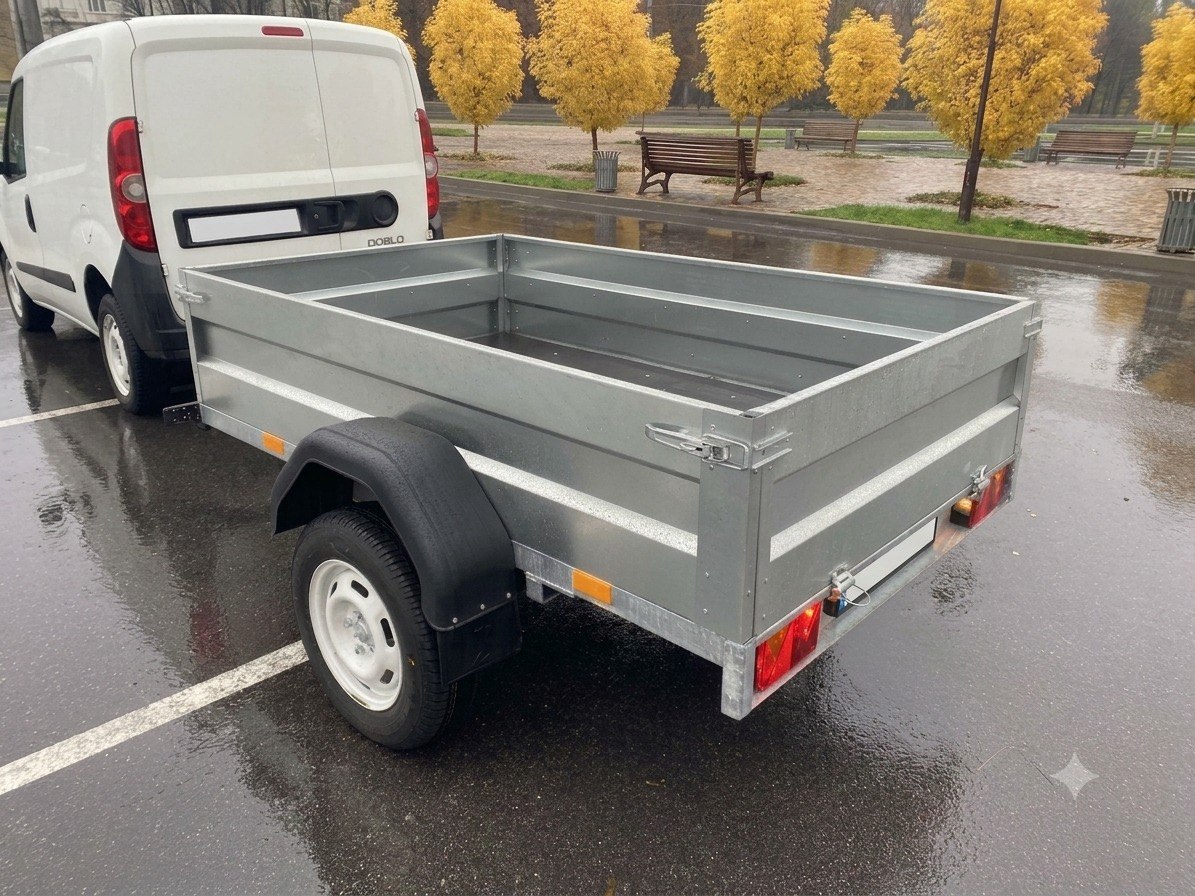
Vehicle platforms — recovery vehicles, flatbed trailers and goods trailers — operate daily in extreme conditions: road salt in winter, humidity, mechanical stress and temperature fluctuations. A metal structure without proper protection will rust within just 2–3 years of use. Hot-dip galvanising of vehicle platforms is a technology that solves this problem fundamentally, rather than merely cosmetically.
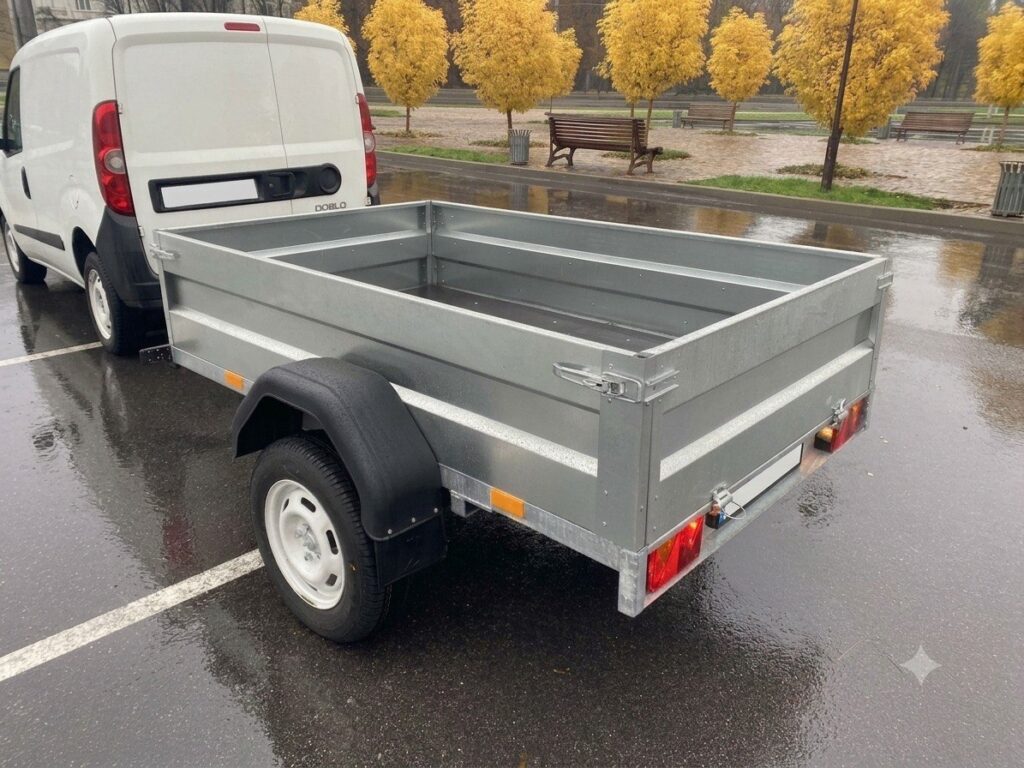
What is the galvanising of vehicle platforms and why is it more effective than painting?
Hot-dip galvanising involves immersing a metal structure in molten zinc at a temperature of over 450°C. As a result, rather than a film, an ultra-strong zinc-iron alloy forms on the metal’s surface, which is chemically bonded to the base material. Unlike paint and varnish coatings, which chip, crack and peel over time, a zinc coating:
- is resistant to chipping and mechanical damage when loading equipment;
- provides cathodic protection — even if a scratch appears on the surface, the zinc continues to protect the steel from corrosion;
- withstands harsh environments: chemicals, salt, moisture and temperature fluctuations;
- lasts between 25 and 50 years without additional maintenance, depending on the thickness of the coating and operating conditions.
This is precisely why galvanising is the standard method for protecting metal structures in the transport sector: tow truck platforms, equipment transport trailers, cargo trailer bodies and semi-trailer frames.
Which components are subject to galvanising
Virtually all metal components of vehicle platforms are subject to galvanising:
- Tow truck platforms — the working surface that is constantly in contact with cargo, dirt and moisture;
- Trailer platforms for transporting specialised, construction and agricultural machinery;
- Cargo trailers and semi-trailers — frames, side panels, body components;
- Auxiliary metal structures: ramps, brackets, fasteners, frames.
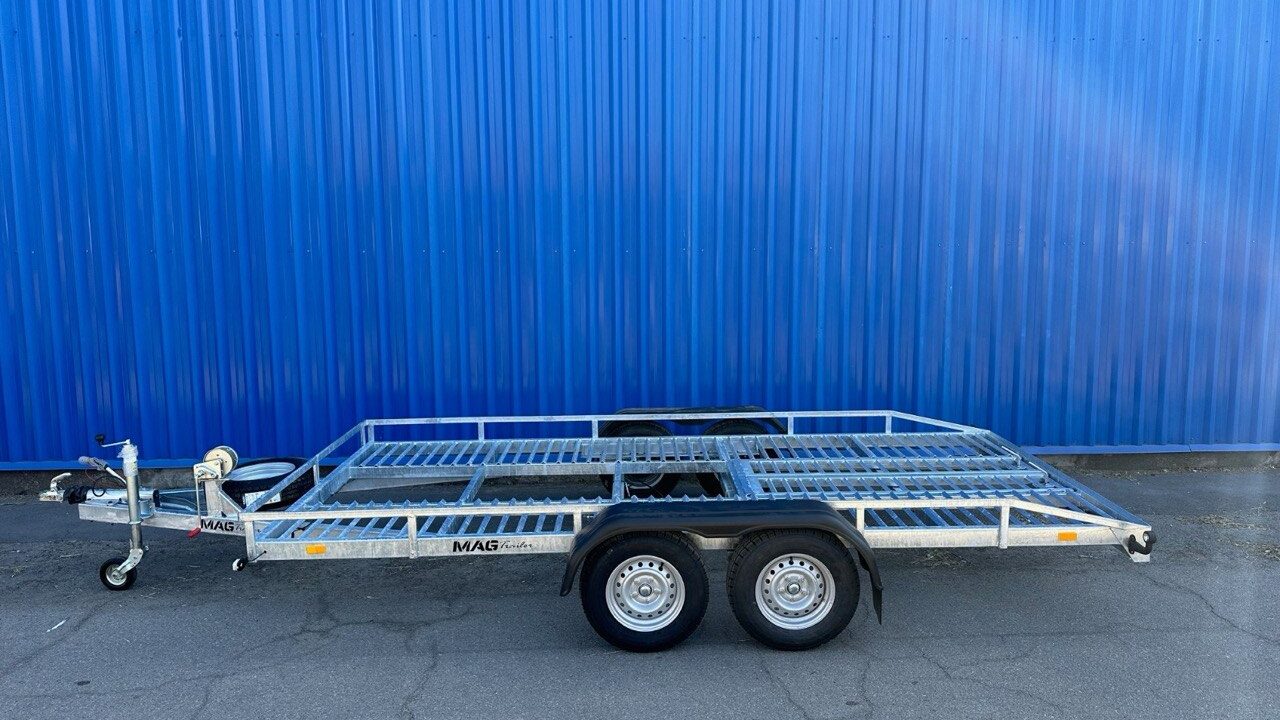
Galvanising of large-scale structures up to 14 metres
One of the key technical challenges in galvanising vehicle platforms is the size of the structures. Standard galvanising baths are designed for smaller dimensions, so not every production facility is capable of treating a tow truck frame or gun carriage in one piece, without welded joints, after galvanising.
Our production line allows us to galvanise structures up to 14 metres in length in a single dip. This is critical to the quality of the final result:
- the zinc coating is applied evenly along the entire length of the structure;
- there are no joint areas where the seams would need to be treated with cold-applied zinc after welding;
- the geometric accuracy of the frame is maintained, which is particularly important for tow truck platforms and gun carriages, where deviations in geometry affect the secure fastening of the load.
Stages of the hot-dip galvanising process
- Surface preparation — degreasing, acid pickling to remove scale and rust, and fluxing.
- Immersion in molten zinc — the structure is immersed in a zinc bath at a temperature of 450–460°C.
- Alloy formation — the zinc reacts with the iron to form several layers of an intermetallic alloy, over which a pure zinc layer is formed.
- Cooling and coating thickness control — the thickness of the zinc layer is checked in accordance with the thickness of the base metal, as specified by the relevant standards (usually DSTU EN ISO 1461).
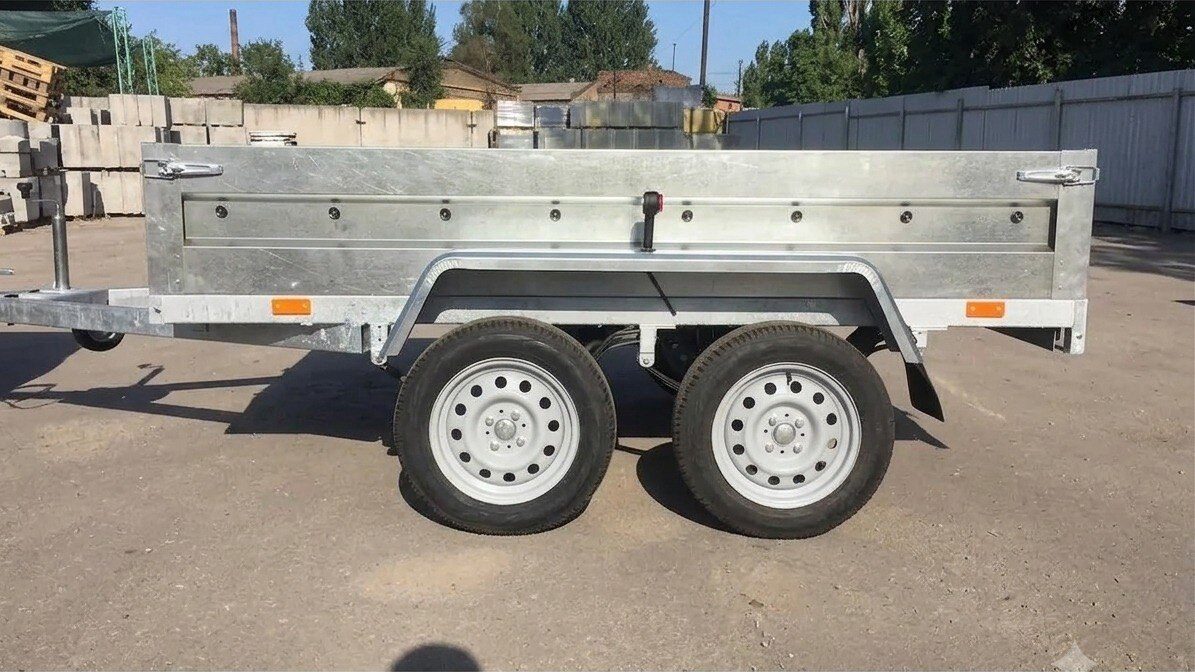
Advantages of galvanising for fleet owners and manufacturers of vehicle platforms
For companies operating recovery vehicles, tow trucks or a fleet of goods trailers, galvanising is, first and foremost, a cost-saving measure:
- Reduced maintenance costs — no need to regularly repaint or treat areas of corrosion;
- Preservation of equipment value — a galvanised platform retains its appearance and technical condition for much longer;
- Operational safety — corrosion of metal fastenings and load-bearing structures directly affects the safety of cargo transport;
- Compliance with customer requirements — many tenders and corporate clients require anti-corrosion protection in accordance with hot-dip galvanising standards.
Galvanising or painting: which to choose for a car transporter
Painting provides cosmetic protection for 2–5 years and requires regular repainting. Hot-dip galvanising is a one-off investment with a coating lifespan of decades, even when constantly exposed to road chemicals and mechanical stresses. For structures operating in harsh conditions — and recovery vehicles, tow trucks and cargo trailers certainly fall into this category — galvanising is an economically and technically sound solution.
Order galvanising for vehicle platforms
We carry out hot-dip galvanising of metal structures up to 14 metres in length, including tow truck platforms, gun carriages and freight trailer frames. Please contact us for a quote on the cost of galvanising your structure and for advice on the technical specifications of the coating.