
Discuss the project

Заголовок

Аккордеон інфо-блоку

Будівельні металоконструкції – це металеві вироби, призначені для будівництва об’єктів різного призначення.
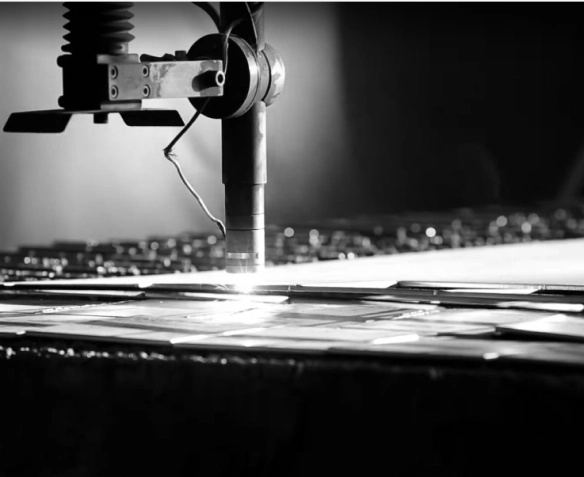

Будівельні металоконструкції – призначені для будівництва об’єктів різного призначення.

Будівельні металоконструкції – це металеві вироби, призначені для будівництва об’єктів різного призначення.Будівельні металоконструкції – це металеві вироби, призначені для будівництва об’єктів різного призначення.

Компанія неодноразово брала участь
у виконанні проєктів державного рівня,
у тому числі спеціалізується
на проєктах «під ключ»
Video placeholder
Дивитись відео
Найбільша ванна в Україні
Компанія неодноразово брала участь
у виконанні проєктів державного рівня,
у тому числі спеціалізується
на проєктах «під ключ»
150
Висококваліфікованих спеціалістів
20+
Машин відвантажуємо щодоби
Наші партнери
Партнер
Партнер
Партнер
Партнер
Партнер
Партнер
Партнер
Партнер
Партнер
Партнер
Партнер
Партнер
Партнер
Партнер
Партнер
Партнер
Партнер
Партнер
Шлях нашого
розвитку в цифрах
01
2011 рік
Перший завод уведений в експлуатацію у м. Черкаси. Виробництво укомплектовано сучасною лінією гарячого цинкування фірми Western Technologies. Це найбільша ванна цинкування в Україні та одна з найбільших в Європі розміром 14,0 м * 3,2 м * 1,6 м.
02
2014 рік
Успішно пройшли аудит й отримали сертифікат відповідності стандарту ISO 1461:2009 «Покриття, нанесені методом гарячого цинкування на готові вироби зі сталі та заліза».
03
2017 рік
Запуск власного виробництва конструкцій сталевих опор повітряних ліній електропередачі й відкритих розподільних пристроїв підстанцій у м. Біла Церква, Київська обл.
04
2021 рік
Запуск лінії цинкування метизної продукції (барабан для метизної продукції)
Гортай назад
Гортай далі
Читати більше
What is the lifespan of hot-dip galvanized coating?
The lifespan of hot-dip galvanized coating (34-170 years) is entirely predictable and is determined by the coating thickness and the type of aggressive activity in the specific area. Zinc protects steel for a very long time, allowing for energy and resource savings with minimal environmental impact. Unlike paint, zinc protects steel in two ways: Barrier protection: The zinc layer isolates the steel from moisture and oxygen. Electrochemical (sacrificial) protection: Zinc is a more active metal, so if the coating is damaged, it ‘sacrifices’ itself by corroding instead of the steel. Factors affecting durability Metal thickness: The thicker the steel, the thicker the zinc layer becomes during the reaction in the bath. On metal over 6 mm thick, a layer of 100–150 µm is easily achieved, adding a further 20–30 years of service life. Chemical composition of the steel: The content of silicon (Si) and phosphorus (P) affects the reaction rate (the Sandelin effect). Correctly selected steel allows for a dense, high-quality coating. pH level of the environment: Zinc works best in a pH range of 6 to 12. In very acidic or highly alkaline environments, the corrosion rate increases sharply. Abrasive wear: If a structure (e.g. a power line pylon) is located in an area of strong winds carrying sand, mechanical friction can accelerate the wear of the coating.
Why are some metal structures glossy after hot-dip galvanizing and others matte?
The outer layer of zinc provides a shiny appearance; if this layer has time to react with iron during cooling (in the case of reactive steel galvanizing), the appearance of the product becomes less attractive. The amount of silicon (Si) and phosphorus (P) in the steel, as well as the way the rolled products are manufactured, can affect the reaction of steel with molten zinc. Table 1 of EN ISO 14713-2 (see below) provides a simplified guide to the characteristics of galvanizing coatings. Translated with DeepL.com (free version) Table 1 Coating characteristics depending on steel composition
Category Typical levels of reactive elements, %. Additional information Typical characteristics of the coating
А <0,03% Si і <0,02% P See NOTE 1 and NOTE 4 The coating has a shiny appearance with a fine texture. The coating structure contains an outer layer of zinc.  
B S 0,14% Si до <0,25% Si Other elements can affect the reactivity of the steel. In particular, a phosphorus level of more than 0.035% results in increased reactivity. The coating can have a shiny or matte appearance. The structure of the coating may include an outer layer of zinc or an iron-zinc alloy may reach the surface of the coating, depending on the composition of the steel.
C від> 0,03% Si до <0,14% Si Overly thick coatings may be formed. The coating has a darker appearance with a coarse texture. Iron and zinc alloys predominate in the coating structure and often extend to the surface of the coating, which reduces resistance to handling damage.  
D > 0,25% Si The thickness of the coating increases with increasing silicon content.  
NOTE 1 Steels with compositions satisfying the formulas Si < 0.03% and Si + 2.5P < 0.09% should also exhibit these characteristics. For cold-rolled steels, these characteristics are expected to be met if the steel composition satisfies the formula Si + 2.5P < 0.04%. NOTE 2: The presence of alloying elements (e.g., nickel or aluminum) in the zinc melt can significantly affect the coating characteristics listed in this table. This table does not provide appropriate guidance for high-temperature galvanizing (i.e., immersion in molten zinc at 530°C to 560°C). NOTE 3 The composition of the steel listed in this table will vary due to other factors (e.g. hot rolling) and the limits of each range will vary accordingly. NOTE 4 Steels with a composition of <0.01% silicon that also have an aluminum content >0.035% may exhibit lower reactivity, which may result in lower than expected coating thicknesses. These steels may have a reduced level of coating cohesion. NOTE 5 - The design of the galvanized product may also affect the performance of the coating.
 
Why is hot-dip galvanising more cost-effective than painting metal structures?
The main advantage of hot-dip galvanising is the absence of hidden corrosion. Whilst paint can peel away, allowing the metal beneath to rust unnoticed, zinc forms an iron-zinc alloy with steel at a molecular level. For energy infrastructure (power lines, communication towers) in Ukrainian conditions, hot-dip galvanising at Metal Invest’s facilities guarantees a minimum of 50 years of service life without any costs for repainting or renewing the protective coating. This makes the life-cycle cost (LCC) of the structure 3–4 times lower than when using paint and varnish materials
Отримайте персональну пропозицію від лідера гарячого цинкування готових сталевих виробів
Найвища якість продукції та досвід виконання проєктів державного значення
Зв’язатися з менеджером
Фото клієнта
Фото клієнта
Фото клієнта
Понад 2 000 клієнтів користуються нашими послугами щороку

    Fill out the form
    Our manager will contact you shortly
    Download file
    Select or drag and drop the file
    (PDF, JPG, DOC, Word, Excel, PowerPoint)
    Cancel